



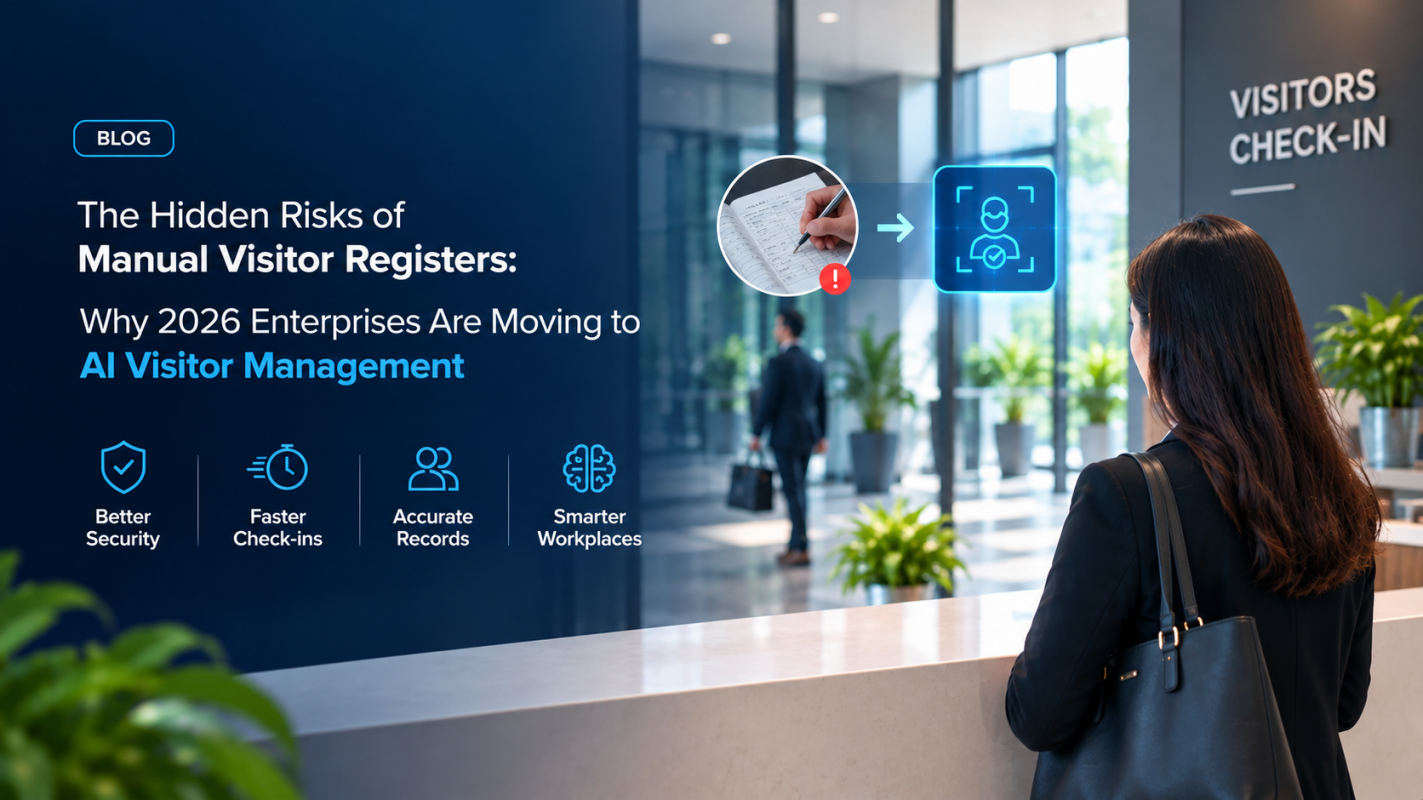
The Register at the Gate Is Still the Weakest Link
Walk into most office parks, residential societies, or campuses in India today, and you'll still find it: a spiral-bound register at the security desk, a pen tied to a string, and a guard asking visitors to "write your name and mobile number."
It looks harmless. It isn't.
That register is often the single least secure, least auditable, and least compliant piece of infrastructure in an otherwise modern building. And in 2026, with the DPDP Act in force and physical security incidents making regular headlines, that gap is getting harder to justify.
Why Manual Visitor Logs Fail — Quietly, Every Day
1. Nobody actually verifies identity. A name and a phone number on paper prove nothing. Visitors can write anything, and guards rarely have the time or authority to cross-check it against an ID card during a busy hour.
2. The data is a compliance liability, not an asset. Under the DPDP Act, any register capturing a visitor's name, contact number, and photo of an ID counts as personal data. A paper book sitting on an open desk, readable by every subsequent visitor, with no access control and no retention policy, is exactly the kind of exposure regulators are starting to look at.
3. There's no real-time visibility. If a facility manager wants to know how many visitors are on-site right now, or which floor a guest is headed to, the register can't answer that. In an emergency evacuation or a security escalation, that blind spot matters.
4. It doesn't scale, and it doesn't connect. A visitor log lives in isolation. It doesn't talk to the access control system, the host's calendar, or the attendance platform tracking employees in the same building. Every system operates on its own island which is exactly how tailgating and impersonation slip through.
5. Audits become a forensic exercise. When something does go wrong a lost badge, an unescorted visitor, an incident during an audit someone has to manually flip through handwriting to reconstruct a timeline. That's hours of work for information a system should surface in seconds.
What AI-Based Visitor Management Actually Changes
The shift isn't about digitizing the same register into a tablet with a form. It's about replacing the entire verification model.
Face-based check-in, not self-reported data. Instead of a visitor typing their own details, AI-powered kiosks or edge devices capture a live face scan, matched against a pre-registered appointment or ID. The system verifies who someone is rather than trusting what they claim to be.
Pre-approval before the visitor even arrives. Hosts can approve visitors in advance, generating a digital pass tied to a specific time window, floor, and purpose of visit. When the visitor arrives, entry is instant — no manual approval bottleneck at the gate.
Automatic host and security notifications. The moment a visitor is verified at entry, the host and the security desk get a real-time alert. No phone calls to reception, no guards trying to track someone down on an intercom.
A live, searchable audit trail. Every entry and exit is timestamped, logged, and instantly searchable who visited, when, whom they met, and how long they stayed. What used to take an afternoon of paging through a register now takes a five-second search.
Data handled the way regulation actually requires. Encrypted storage, defined retention windows, and restricted access replace an open notebook anyone can read. This is the difference between "we collected the data" and "we can prove we handled it responsibly."
Where This Matters Most Right Now
- Corporate offices managing a constant flow of vendors, interviewees, and client visits alongside employee attendance where a fragmented visitor and workforce system creates security blind spots.
- Residential communities, hostels, and PGs, where unverified entry is a direct safety concern for families, and where a system like GateSense can combine visitor verification with staff tracking at a single gate.
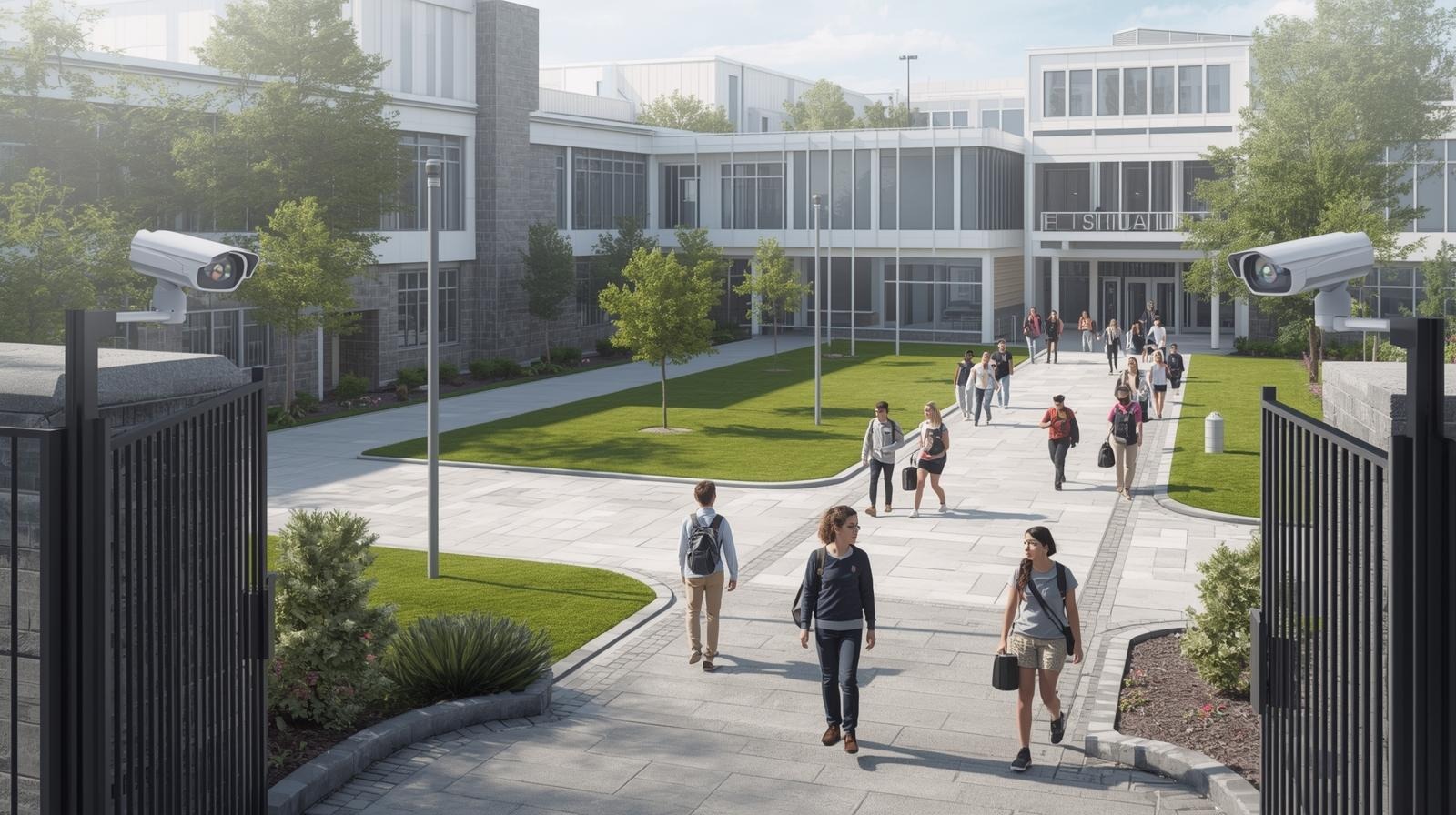
- Campuses and large educational institutions, where visitor tracking has to coexist with student and staff attendance, and where accreditation bodies increasingly expect documented, auditable entry records.
- Manufacturing and industrial sites, where an unverified visitor on the shop floor isn't just a security issue it's a safety one.
The Real Question for Facility and Security Leaders
The question isn't whether a visitor management system is worth the investment. It's whether a business can still justify running physical entry the literal front door of the organization on the same level of rigor as a to-do list scribbled on paper.
In 2026, the answer for most is no. AI-based visitor verification isn't an upgrade for its own sake; it's the baseline expectation for anyone serious about security, compliance, and the experience they give the people walking through their door.
Attendify's AI Security suite brings face-verified visitor management, real-time entry alerts, and edge-based processing to offices, campuses, and residential communities.




Comments
Loading comments...