

NMC’s AEBAS Mandate in 2026: How Medical Colleges Can Stay Compliant Without Disrupting Classes
4 min Read
For medical colleges across India, attendance tracking has shifted from an internal administrative task to a high-stakes regulatory requirement. With the National Medical Commission (NMC) tightening enforcement around the Aadhaar Enabled Biometric Attendance System (AEBAS)—including the transition away from traditional fingerprint and QR-code wall devices toward face-based verification and mandatory National/State Medical Registration (NMR/SMR) number linking—institutions face zero margin for error.
Any gap in daily attendance logs no longer just creates paperwork; it risks automated attendance rejection and directly impacts an institution's standing during NMC assessments, seat-renewal inspections, and compliance audits.
What Changed in NMC Attendance Regulations?
Over the past year, NMC circulars have reshaped how medical colleges and standalone PG institutes must verify presence on campus:
- Shift to Face-Based Authentication: Legacy fingerprint scanners and QR-based wall terminals have been phased out in favor of facial biometric verification to eliminate proxy punches and hygiene bottlenecks in clinical environments.
- Strict Data & Registration Linking: Colleges must ensure every faculty member, senior resident, tutor, and demonstrator has verified NMR/SMR credentials mapped accurately—otherwise, daily logs face automatic blocking.
- Continuous Audit Readiness: NMC monitors centralized attendance feeds online, meaning late reconciliations or missing lecture/clinical duty logs can immediately trigger compliance flags.
Where Traditional Attendance Systems Fall Short in Medical Campuses
While AEBAS covers faculty and resident compliance, medical colleges still struggle with the broader campus picture—especially tracking MBBS and PG student attendance across large lecture halls, labs, and hospital postings, as well as maintaining secondary institutional records.
- Lost Teaching Time: Manual roll calls in batches of 150 to 250 MBBS students easily eat up 10 to 15 minutes per lecture—hours of lost clinical and academic instruction every week.
- Queue Bottlenecks & Proxy Attendance: Single-point biometric terminals outside lecture theatres create crowding between back-to-back sessions, while paper sign-in sheets remain vulnerable to proxy signatures.
- Fragmented Records Across Departments: When faculty logs sit in one portal, student lecture attendance sits in registers, and hospital duty rosters sit in spreadsheets, preparing audit-ready reports for NMC, NAAC, or university inspections becomes a manual fire drill.
How AI Face Recognition Bridges the Gap
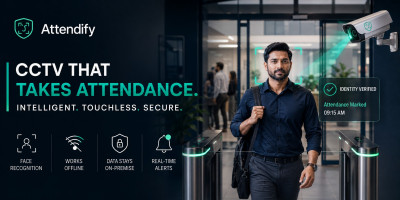
Modern medical institutions are solving these operational bottlenecks by pairing regulatory AEBAS workflows with passive, AI-powered classroom and campus attendance.
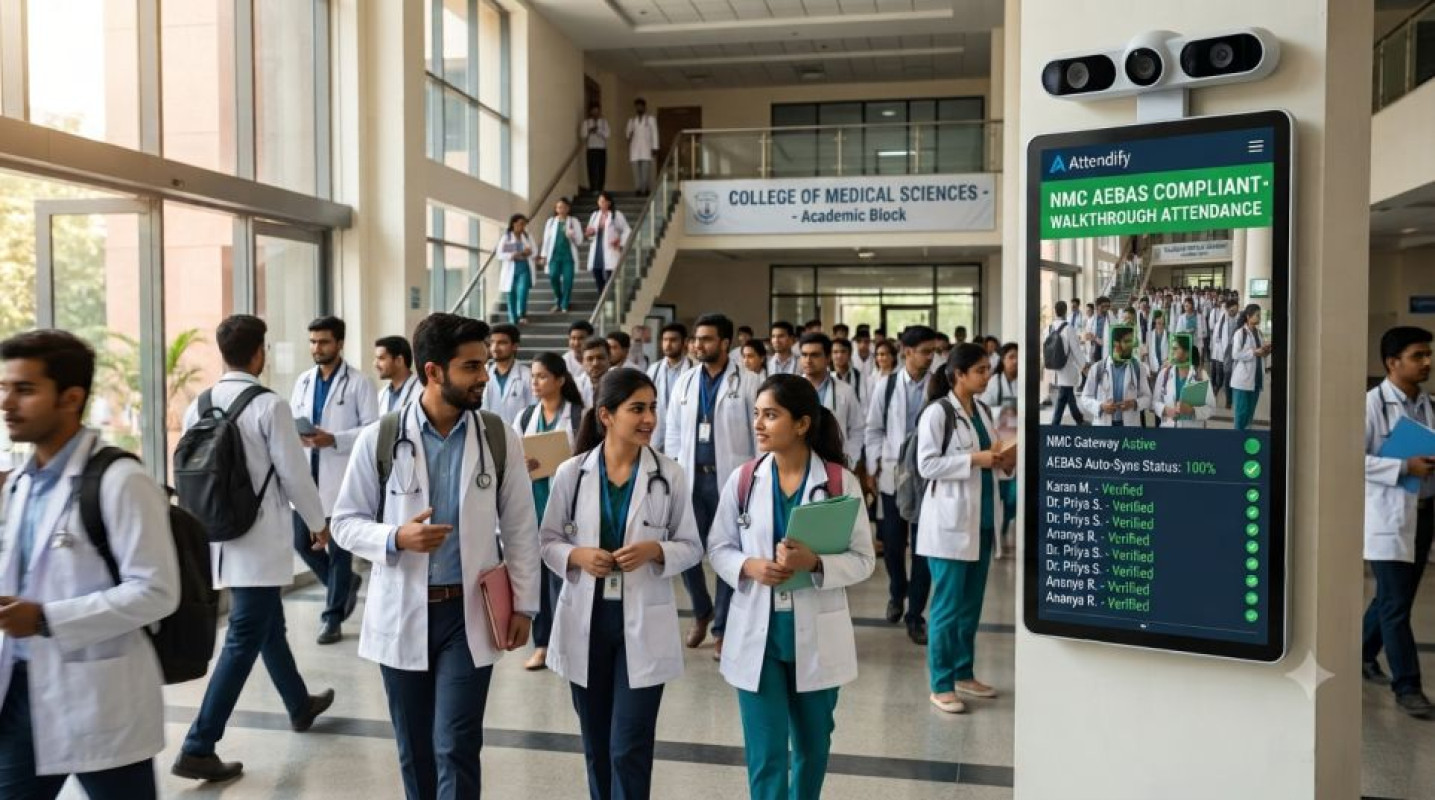
- Zero-Interruption Classroom Capture: Instead of passing registers or queuing at a wall device, high-resolution AI cameras verify registered students simultaneously during scheduled lecture windows—capturing an entire hall in seconds without disrupting faculty.
- 99.8% Accuracy in Real-World Clinical Settings: Built to recognize faces reliably even with spectacles, surgical masks, or varied lighting, ensuring medical staff and students aren't delayed between wards and classrooms.
- Offline Edge Processing & Data Privacy: Biometric templates are encrypted and processed locally on-premise via Edge AI, ensuring uninterrupted attendance logging even during campus network drops while keeping sensitive institutional data under complete college ownership.
- Audit-Ready ERP & Compliance Exports: Automated, tamper-proof digital logs integrate directly with existing college ERP and HRMS systems, giving Deans, Principals, and Nodal Officers real-time visibility across departments.
Moving From Reactive Compliance to Effortless Automation
NMC’s regulatory direction is clear: verifiable, tamper-proof presence is now the baseline for running a compliant medical institution. By replacing manual roll calls and legacy hardware with touchless AI facial recognition, medical colleges can protect instructional hours, eliminate proxy attendance, and stay perpetually audit-ready.
Ready to modernize attendance across your medical campus?
See how Attendify Classroom and Attendify HRMS automate student and staff attendance with zero disruption. Request a Demo today.

Comments
Loading comments...